2026-10-27
Yaksu Station Dental Clinic | Can Anyone Get No-Prep Laminate Veneers? Differences from Minimal-Prep
Explains the differences between no-prep and minimal-prep laminate veneers, when each may be suitable, and why the right choice depends on each patient's teeth and bite.
Hello.
Bareun Yeong Dental Clinic, Yaksu Station
I am Dr. Kim Tae-young, the director of the clinic. ^^
“I want laminate veneers, but do I really have to shave down my teeth?”
“Are no-prep laminate veneers better than minimal-prep ones?”
Some people want to improve the shape or color of their front teeth or close the gaps between them, but they hesitate to get treatment because they worry about damaging their natural teeth.
To get straight to the point,
No-prep laminate veneers are not a treatment that is possible for everyone.
Depending on the position, size, and color of the teeth, the gumline, and how the upper and lower teeth bite together (occlusion), a no-prep approach may be suitable, or a minimal-prep approach that only lightly trims the necessary areas may be more appropriate.
Today, I will explain the differences between no-prep and minimal-prep laminate veneers and when each option may be considered.
When is a no-prep laminate veneer possible?
No-prep laminate veneers are a treatment in which thin ceramic restorations are bonded to the tooth surface without removing any tooth structure, improving the shape and proportions of the teeth.
Because material is added on top of the existing tooth, whether there is enough space for the restoration is the key criterion.
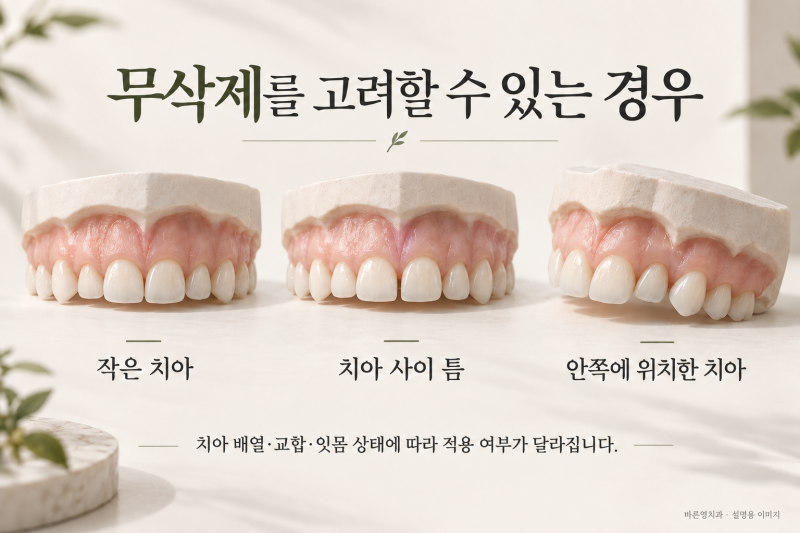
Cases where no-prep may be considered:
When the front teeth are small and need to be enhanced in size and proportion (e.g., microdontia)
When there are small gaps between the teeth
When some teeth are positioned further back, leaving room to improve their shape
When teeth are small and their size needs to be increased to improve tooth proportion
However, even with these features, no-prep is not always possible. Tooth alignment, bite, and gum health must all be evaluated together.
Cases Where No-Prep Laminate Is Difficult
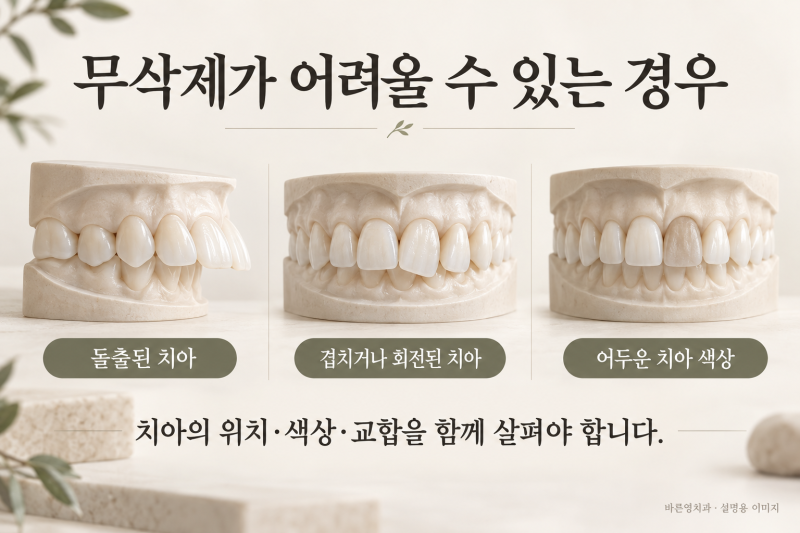
① When the front teeth already protrude
Adding ceramic thickness on top of existing teeth can make them protrude further or look even bigger.
② When teeth overlap or are rotated
Without removing any tooth structure, it can be difficult to create a neat, even shape. Depending on the alignment, orthodontic treatment may be considered before laminate veneers.
③ When the teeth are significantly darker in color
With thin ceramic, the darker color of the natural tooth may show through. Increasing the thickness to mask it can make the tooth shape look unnatural.
In particular, if excess thickness is added at the junction between the gums and the teeth, it becomes harder to keep the area clean and may irritate the gums.
In other words, “not shaving the teeth” does not always mean “a more natural result.”
Why Is Minimal-Prep Laminate Sometimes Needed?
Minimal-prep laminate veneers are a method in which only the necessary areas are carefully trimmed to match the planned final tooth shape and create space for the ceramic.
For example, even if laminate veneers are planned for six front teeth, the extent of preparation may differ between teeth that protrude outward and teeth that sit further back.
How much the teeth are trimmed depends on tooth alignment, the thickness and color of the restoration, the bite, and the target design.
For this reason, it is more important to determine the necessary range for each patient individually than to apply a fixed amount of tooth reduction.
It is important to plan laminate veneers in a way that preserves healthy enamel as much as possible, because natural tooth structure that has been removed does not grow back.
The key question is not how little is shaved, but why that area needs to be trimmed.
No-Prep vs. Minimal-Prep Laminate Comparison
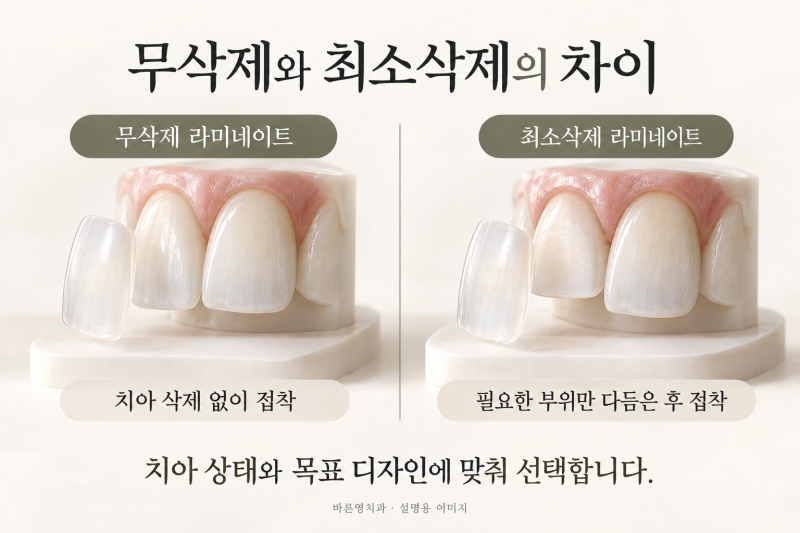
Category | No-Prep Laminate | Minimal-Prep Laminate |
Treatment method | Bonding the restoration without removing any tooth structure | Bonding after limited trimming of the necessary areas |
Who it's for | Small teeth, gaps between teeth, teeth set further back, etc. | Cases requiring adjustment of protrusion or restoration thickness, etc. |
Advantages | Preserves natural tooth structure since no tooth is removed | Advantageous for adjusting tooth shape, protrusion, and restoration thickness |
Considerations | Teeth may look thicker, and it is limited to certain cases | Requires removal of tooth structure, so careful planning is essential |
Neither option is always better than the other.
What matters is choosing the treatment that suits your current teeth and final design.
Can a no-prep laminate be fully reversed later?
“Since it's no-prep, can't I just have it removed if I don't like it?”
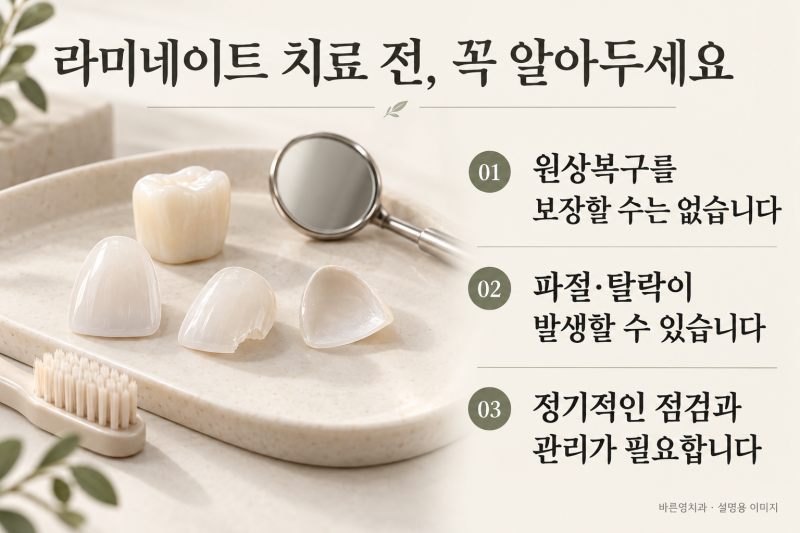
Even with no-prep laminate, it cannot be guaranteed that the teeth can be returned completely to their pre-treatment state.
This is because the tooth surface can change during the process of bonding, removing, or redoing the restoration.
In addition, both no-prep and minimal-prep laminate veneers can chip or come loose due to strong impact, teeth grinding (bruxism), or bite forces, so regular checkups and care are necessary.
The Laminate Design That Bareun Yeong Dental Clinic Values
Bareun Yeong Dental Clinic places greater importance on thoroughly explaining to patients “why that amount of tooth reduction is needed” rather than “how little was removed.”
Even when planning laminate veneers for six or eight front teeth, each tooth has a different position and shape.
We consider the change the patient wants, tooth proportions, gumline, and bite together, and design the result to preserve natural teeth as much as possible.
Why we plan only one laminate treatment per day
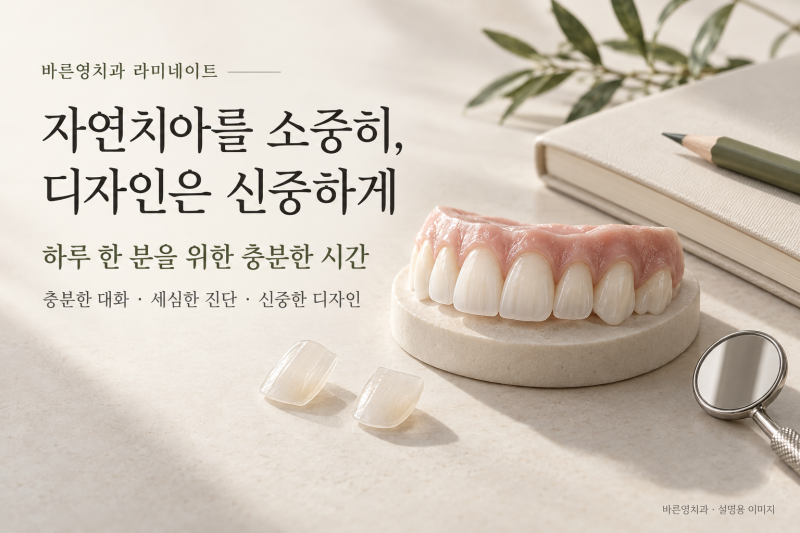
It allows us to talk through everything thoroughly without rushing, examine each tooth carefully, and thoughtfully decide on the design that suits the patient.
What matters with laminate veneers is not simply avoiding any tooth reduction, but planning only the changes that are needed while preserving natural teeth as much as possible.
If you are considering laminate veneers near Yaksu Station, rather than only checking whether no-prep is possible, we recommend first looking into which treatment is best suited to your own tooth condition.
Thank you.
Bareun Yeong Dental Clinic, Yaksu Station
Director Kim Tae-young
This article is intended to provide general medical information only. Whether treatment is possible, the method, the outcome, and side effects may vary depending on each person's teeth, gum condition, and bite, so decisions should be made after a thorough examination and consultation.
Frequently Asked Questions
Can anyone get no-prep laminate veneers?
No, it is not a treatment that is possible for everyone. Depending on the position, size, and color of the teeth, the gumline, and the bite (occlusion) between the upper and lower teeth, a no-prep approach may be suitable, or a minimal-prep approach may be more appropriate.
Can a no-prep laminate be restored to its original state later?
It cannot be guaranteed that the teeth can be returned completely to their pre-treatment state, because the tooth surface may change during the process of removing or redoing the restoration.
Do you always have to shave your teeth for laminate treatment?
Not necessarily. There is a no-prep method that does not require shaving the teeth, but it is not possible in every case. A minimal-prep method, which trims only the necessary areas, may be more appropriate.
Which is better: no-prep or minimal-prep laminate veneers?
Neither one is always the better option. What matters is choosing the treatment that suits your current teeth and final design, and tooth alignment, bite, and gum health must all be evaluated together.
When is minimal-prep laminate considered?
It may be considered when adjustment of protrusion or restoration thickness is needed. It is advantageous for adjusting tooth shape and protrusion, but because it involves removing tooth structure, careful planning is essential.