2026-10-09
Can Long-Used Dentures Be Switched to Implants? | Yaksu Station Implant Dentist
Explains whether long-term denture users can switch to implants, covering bone assessment, systemic health, bone grafting, fixed vs. removable options, and post-surgery care.
Hello.
Yaksu Station Dental Clinic
I am Kim Tae-young, head dentist at Bareun Dental Clinic. ^^
In my previous post, I explained the differences between implants and dentures.
This time, I've prepared information that people who are already wearing dentures are likely to wonder about.
I've worn dentures for a long time. Can I still switch to implants now?
To get straight to the point from Yaksu Station Dental Clinic: even if you have worn dentures for a long time, implant treatment can still be considered. However, whether treatment is possible and the specific approach depend on the condition of your jawbone, your overall health, and the type of prosthesis you want.
So rather than deciding based only on how many years you have worn dentures, the first step is to check the current condition of your mouth.
If my dentures are uncomfortable, do I have to switch to implants no matter what?
When dentures keep lifting up while you eat, food gets trapped underneath, or pressure on the gums causes pain, it is natural to think about implants. However, having these discomforts does not necessarily mean you need implant surgery.
Your existing dentures can be adjusted to fit your current oral condition,
"relining," which improves the inner surface that contacts the gums,
or, when needed, a new denture can be made. These options can also be considered.
Even if people all say, "It's hard to chew," the causes can differ.
Whether the gums in a specific area are sore from pressure,
whether the denture slips out when you talk or smile,
or whether it lifts and wobbles when you chew food.
It is best to first identify which part of the denture is causing discomfort and why, and then decide whether to improve your existing denture or consider implant treatment.
Three things to check before switching from dentures to implants
1. Amount of jawbone and surrounding structures
We check how much bone remains at the site where the implant will be placed, and how it relates to nerves and the maxillary sinus. When necessary, we evaluate it in three dimensions with CT imaging.
It is difficult to accurately judge the condition of the bone inside based on the gum shape alone. Implant placement should be planned by considering not only the amount of bone, but also the position of the final teeth and the biting force.
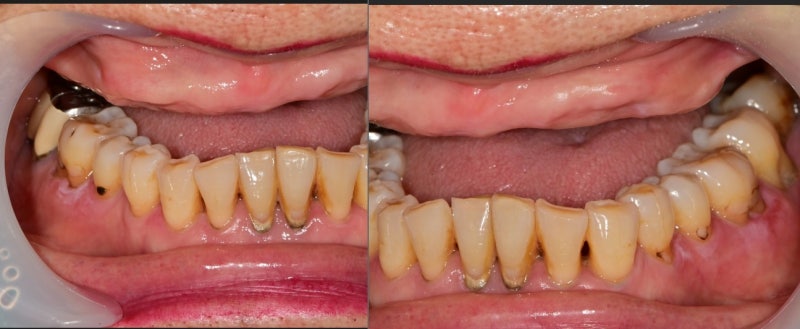
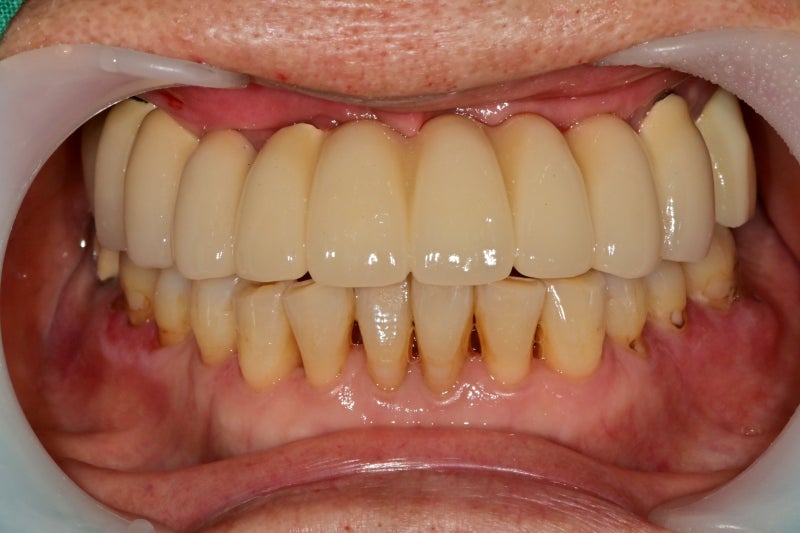
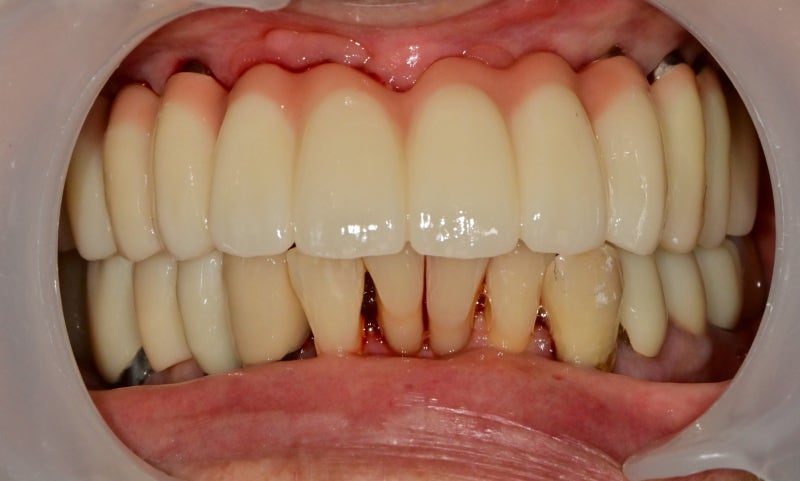
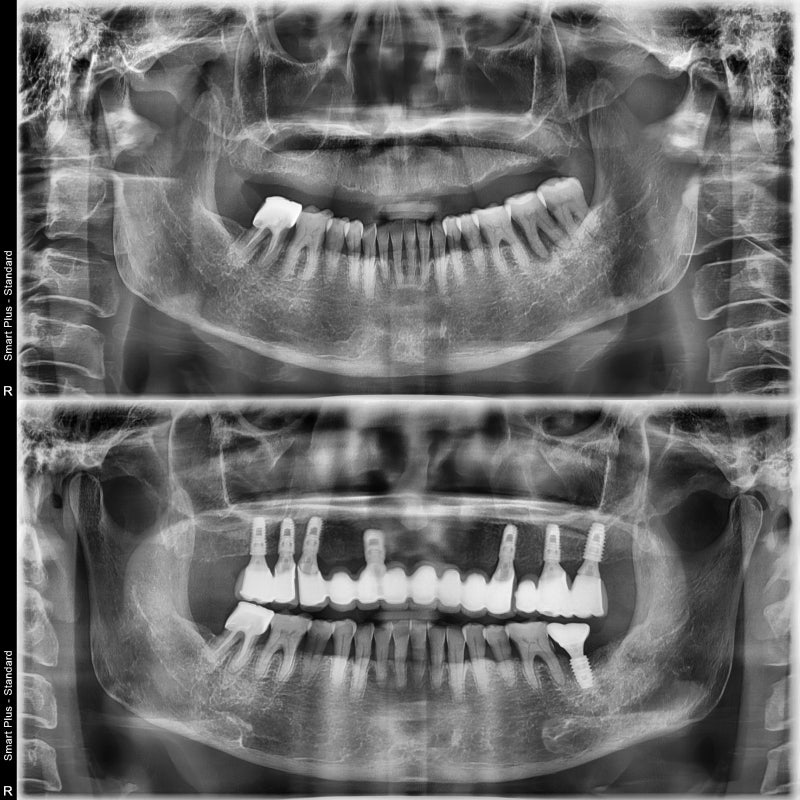
A patient who had been wearing an upper denture had accepted some discomfort in daily life. However, ahead of a major family event, their child's wedding, they came to our clinic wanting implants so they could chew freely again. They received fixed implant treatment.
2. Overall health and current medications
We also check how well any ongoing conditions, such as diabetes or high blood pressure, are controlled, along with the medications you take and whether you smoke. In particular, if you are taking osteoporosis medication, anticoagulants, or antiplatelet agents, please let us know in advance.
Taking these medications does not automatically rule out implants. We review the type of medication, how it is administered, and how long it has been used, and factor these into the treatment plan. If needed, we consult with the prescribing physician. Do not stop taking any medication on your own.
3. Remaining teeth and ability to maintain care after treatment
If you are wearing a partial denture, we also evaluate the health of your remaining teeth and gums. How the remaining teeth are used can change the scope of treatment and the prosthesis design.
We also consider whether you can clean around the prosthesis yourself after treatment or whether you will need help with maintenance. Just as important as ease of use is whether the structure can be cleaned every day.
If I've worn dentures for a long time, is bone grafting mandatory?
Having worn dentures for a long time does not automatically mean you need bone grafting.
If the planned implant site has sufficient bone height and width, the procedure can proceed without bone grafting. On the other hand, in areas where the jawbone has shrunk significantly, bone grafting may be needed. Also, long-term denture use can cause the gums to become very thin, in which case additional procedures such as artificial gingiva or gingival grafting may be necessary.
The scope of these procedures determines the number of treatment stages and the overall timeline.
Even within the same mouth, conditions can differ between front and back teeth, and between the upper and lower jaws. Whether to perform bone grafting and implant placement together, or to graft first and wait for healing, is also decided area by area.
Therefore, it is hard to conclude in advance that "implants are impossible because I've worn dentures for so long," or that "everyone can do it without bone grafting."
If I switch to implants, will everything become fixed teeth?
Implant treatments can broadly be divided into fixed prostheses and removable implant-supported dentures.
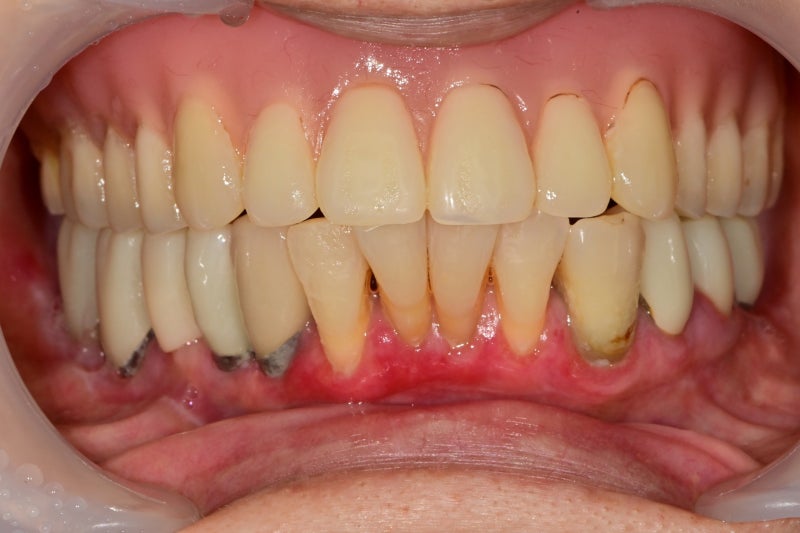
Patients who have been using conventional dentures can hardly chew tough or hard foods on one side of the mouth.
Whether to go with implants plus a denture or full-arch implants is determined through diagnosis, based on the assessment of bone quantity and quality.
Fixed Implant Prosthesis
In this method, implants support tooth-shaped prostheses. You do not remove or insert them yourself, but you need to carefully clean underneath the prosthesis and around the gums.
The number of implants does not necessarily match the number of missing teeth. The required number and placement are determined by considering the condition of the jawbone, the opposing teeth, the extent of the prosthesis, and how biting force is distributed.
Implant-Supported Denture
This method uses implants and attachment devices to improve the retention of the denture. It can help reduce the movement of a conventional denture, but it is still a type that you remove and clean yourself.
The number of implants needed depends on the conditions of the upper and lower jaws and the prosthesis design. Attachments wear down with use, so periodic checks of retention or part replacement may be necessary.
Which option is right for you depends not only on your jawbone, but also on how well the prosthesis supports the lips, how easy it is to maintain, and cost. Fixed does not automatically mean better for everyone.
Can I wear my denture and eat during treatment?
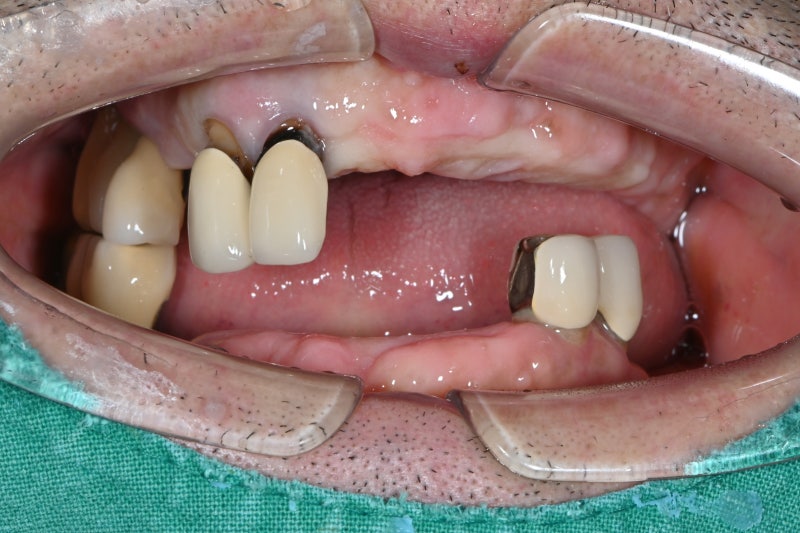
<Before Treatment>
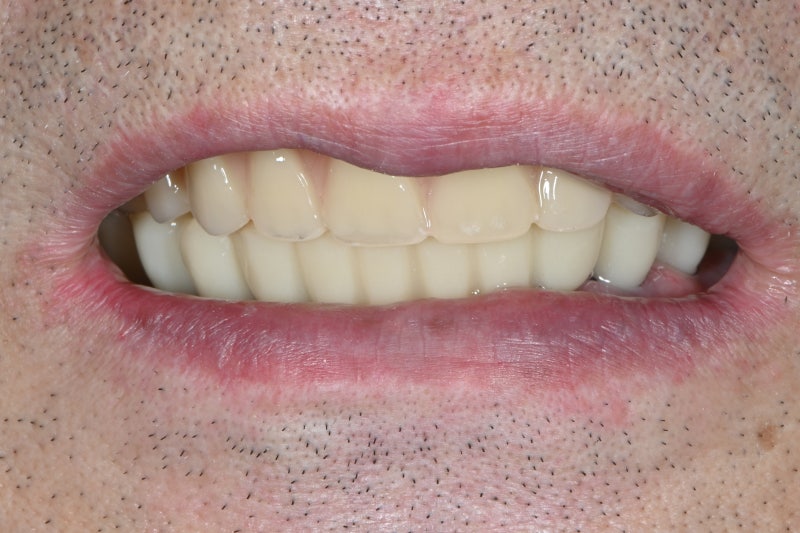
<After Surgery: Temporary Teeth + Temporary Denture>
For cases where some natural teeth remain,
after implants are placed in the necessary positions, areas with good initial stability receive fixed temporary teeth right away, while weaker areas use an adjusted temporary denture until the final prosthesis is complete.
Adjusting your existing denture or using a temporary prosthesis can be considered, but you may need to limit wearing it for a certain period.
Using your existing denture as-is right after surgery can put pressure on the surgical site. For this reason, the treatment plan should address whether to adjust the inner surface of the denture, whether to prepare a different temporary prosthesis, and when to start wearing it.
Whether fixed temporary teeth can be used on the day of implant placement also differs from person to person. Initial stability and the scope of surgery must be checked first. Even with temporary teeth in place, this does not mean you can chew any food as you normally would.
During recovery, stick to soft foods within the range recommended by your dental team, and avoid hard or tough foods. If your denture presses on the surgical site or causes pain, do not just endure it. Have your dentist check it.
The overall treatment period varies depending on whether bone grafting is needed, how the implants heal, and the prosthesis fabrication stages. When you consult with us, be sure to ask not only when treatment will be completed, but also how you will eat and live in the meantime.
How should I take care of implants after switching?
Implants cannot get cavities, but the surrounding gums and bone can become inflamed. For fixed prostheses, learn how to clean the gum margin and the area under the prosthesis, and use interdental brushes or other tools suited to the structure.
For implant-supported dentures, remove the denture and clean the inner surface of the denture and the attachments in your mouth separately. It is best to get cleaning instructions tailored to the material and attachment type.
At regular check-ups, we examine not only the condition of your gums, but also the stability of the prosthesis, the bite, and the condition of the connecting parts. Maintenance and checkups need to continue even after treatment is finished.
Check these before deciding on treatment
What is the most uncomfortable thing about the denture you are wearing now?
Do you prefer a removable option or a fixed one?
Can you consistently set aside time for the treatment period and for regular check-ups afterward?
When planning treatment, I believe it is important to hear both the discomfort you feel now and the lifestyle you hope to have after treatment.
If you are looking into implant treatment at Yaksu Station Dental Clinic, please bring a list of the denture you currently use and the medications you take to your consultation. This will help us identify the cause of your discomfort and the factors to consider for treatment.
After implant surgery, pain, swelling, bleeding, and infection may occur, and during use, problems such as peri-implantitis can develop. We hope you will carefully consider your individual condition and ability to maintain care so you can decide on the treatment that is right for you.
This has been Kim Tae-young, head dentist at Bareun Dental Clinic.
Thank you. ^^
Frequently Asked Questions
Is bone grafting necessary if I have worn dentures for a long time?
No. Long-term denture use does not automatically mean you need bone grafting. If the planned implant site has sufficient bone height and width, the procedure can proceed without grafting. Bone grafting may be needed in areas where the jawbone has shrunk significantly.
If my denture is uncomfortable, do I have to switch to implants?
No. Lifting during meals or pain does not necessarily mean implant surgery is required. Adjusting your existing denture, relining, or making a new one when needed are also options to consider.
Will everything become fixed teeth if I switch to implants?
No. Implant treatment can be divided into fixed prostheses and removable implant-supported dentures. Which one is suitable depends on the condition of the jawbone and the diagnosis. Fixed does not automatically mean better for everyone.
What should I prepare for a treatment consultation?
It helps to bring your current denture and a list of the medications you are taking. This will help identify the cause of your discomfort and the factors to consider for treatment. Do not stop taking any medication on your own.
Can I keep using my denture after implant surgery?
Using your existing denture as-is right after surgery can put pressure on the surgical site. Adjustment or a temporary prosthesis should be included in the treatment plan rather than simply continuing to wear the denture. If the denture presses on the surgical site or causes pain, have your dentist check it instead of enduring it.
How should I care for implants after treatment?
Implants cannot get cavities, but the surrounding gums and bone can become inflamed, so consistent care is essential. For fixed prostheses, clean the gum margin and the area under the prosthesis. For implant-supported dentures, remove them and clean the inner surface and the attachments separately. Regular check-ups also include examining the gums and the prosthesis.