2026-11-03
TMJ Treatment at Yaksu Station Dental Clinic: What Do Dentists Do? Physical Therapy, Botox & Night Guards
How Bareun Dental Clinic near Yaksu Station identifies TMJ disorder causes and treats jaw pain, headaches, and teeth grinding with physical therapy, Botox, and custom night guards.

Hello.
Bareun Dental Clinic near Yaksu Station
I'm Dr. Kim Tae-young, Director.^^
“My jaw hurts, and I get headaches often.”
“I've been told I grind my teeth in my sleep.”
Some patients come to us with concerns like these.
To start with the conclusion,
treatment for jaw pain depends on whether the problem lies in the joint or in the muscles that move the jaw.
That's why we first identify the cause and then decide on the necessary treatment.
Today, I'll explain what temporomandibular joint (TMJ) disorders are and how dentists identify their causes.
I'll also walk you through three treatment options: physical therapy, Botox, and night guards.
What Is a Temporomandibular Joint Disorder? |
The temporomandibular joint (TMJ) moves every time you open and close your mouth.
When people think of TMJ disorders, they tend to picture problems within the joint itself.
However, the cause can also be the muscles that move the jaw, namely the masticatory muscles.
The masticatory muscles are the muscles we use to chew food.
Four muscles in the face are involved in chewing,
and the ones most commonly targeted with Botox are the masseter, along the side of the lower jaw, and the temporalis, near the temple.
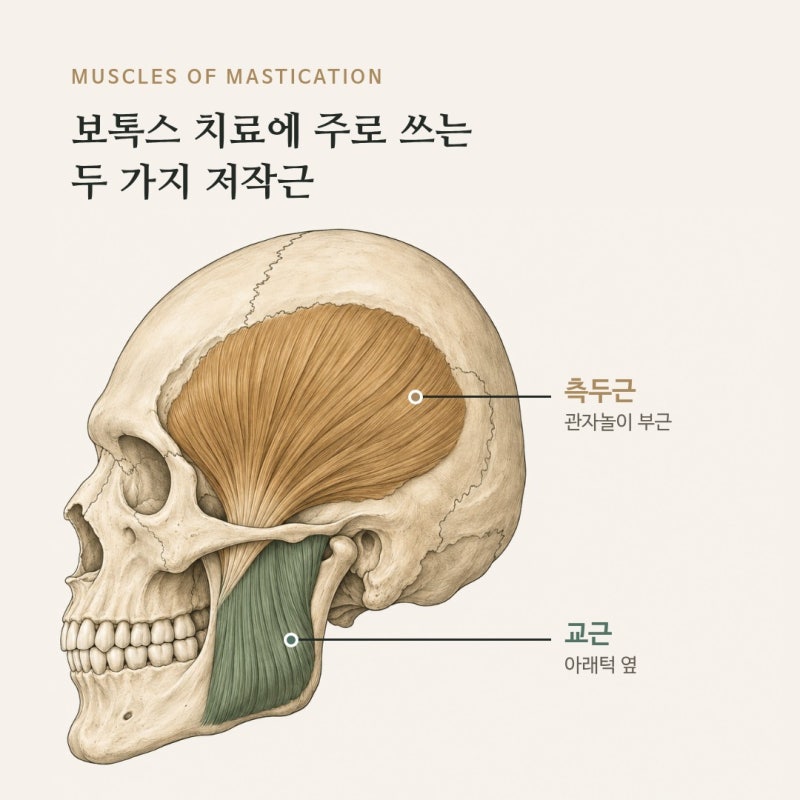
When the masticatory muscles become overly tense and overactive, they can lead to jaw joint pain or headaches.
In addition, a well-developed masseter increases bite force, which can cause teeth or dental restorations to crack or break repeatedly.
If you have a habit of grinding your teeth, or of clenching unconsciously when you concentrate on something,
excessive force is transmitted to your teeth, which can wear them down (attrition).
Grinding during sleep is especially hard to control on your own, since you aren't aware of it.
When a TMJ Exam Is Recommended |

✔ Frequent jaw pain or headaches
✔ Teeth or dental restorations that repeatedly chip, break, or crack
✔ Grinding your teeth, or clenching when you concentrate
✔ A night guard you've been using has worn down or developed a hole
This Is How Dentists Identify the Cause |
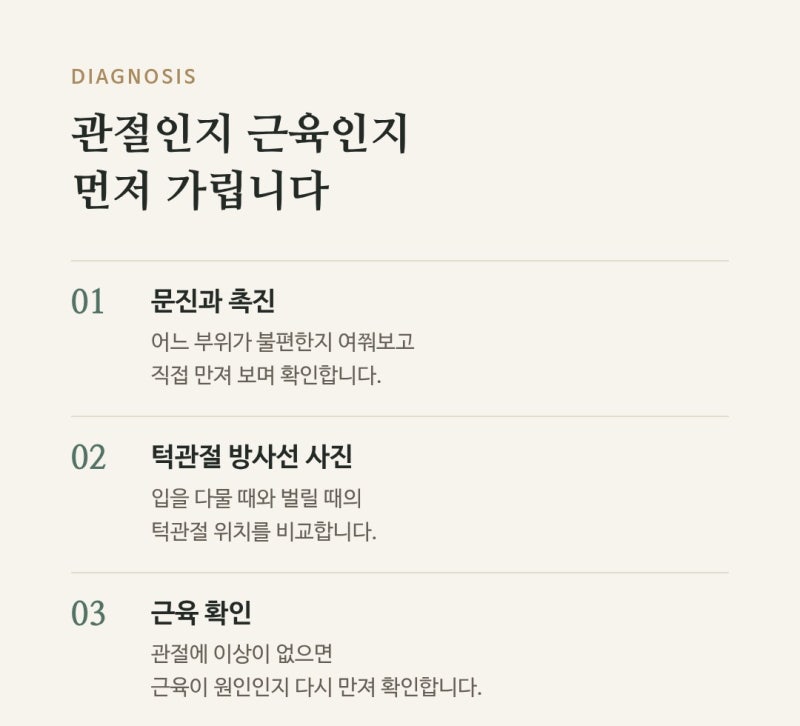
① History taking and palpation
We ask which areas are uncomfortable and check by palpating them directly.
② TMJ X-rays
We take X-rays with the mouth closed and open to compare the position of the joint.
These images show whether there is a problem within the joint itself.
③ Joint mobility assessment
Examination of painful areas and assessment of maximum mouth opening. Testing for areas that cause pain when opening and closing the mouth.
Treatment varies depending on whether the cause is the joint or the muscles, and whether teeth grinding is present.
Treatment Option ① TMJ Physical Therapy |
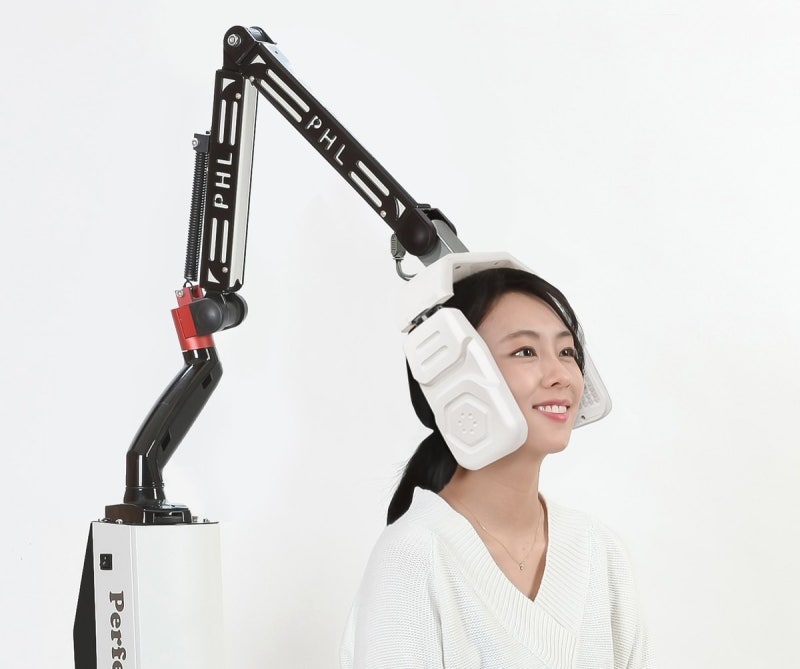
At Bareun Dental Clinic, we provide physical therapy using a TMJ physical therapy device.
As the photo shows, it's a quick and easy treatment to receive.
When the masticatory muscles are the cause, physical therapy is combined with the Botox injections described below,
and regular physical therapy is applied to the affected muscle areas.
Treatment Option ② Botox for the Masticatory Muscles |
When people hear “Botox,” many think first of cosmetic procedures for facial contouring.
In dentistry, botulinum toxin (Botox) is used not only for cosmetic purposes but also for therapeutic ones.
Botox reduces the contraction of the muscle it is injected into.
That makes it useful for relaxing overly tense masticatory muscles and controlling chewing force.
It is used to treat TMJ pain and headaches, tooth fractures caused by strong bite force, and teeth grinding.
Where is the injection given?
It is injected into the masseter and temporalis.
The injection sites and needle entry points are determined based on the distribution and thickness of each muscle.
When does it take effect, and how long does it last?
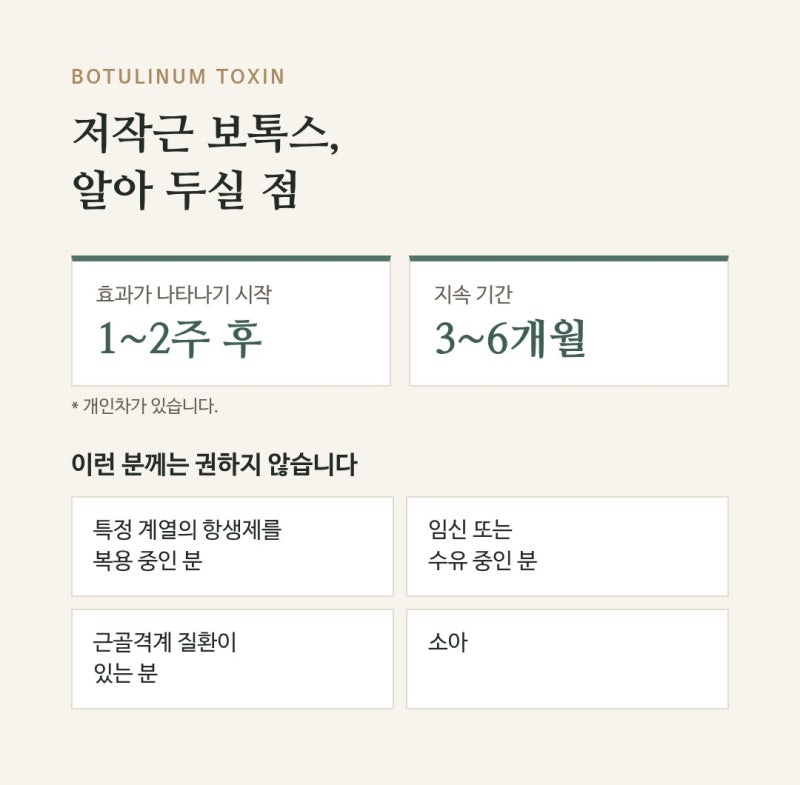
Effects usually begin about 1 to 2 weeks after the injection and last around 3 to 6 months.
Results and duration vary from person to person.
Botox is not recommended for the following people:
· People taking certain classes of antibiotics
· People who are pregnant or breastfeeding
· People with musculoskeletal disorders
· Children
What if your cheek bulges out when you chew?
The masseter has two layers, and a ligament-like membrane separates them.
The injection goes into the deep layer.
However, if this membrane is tight or the muscle is well developed, the medication may not spread to the superficial layer.
As a result, only the superficial layer may bulge out when you chew.
In this case, we monitor the progress, and if it remains the same over time, we give an additional injection to that area.
Treatment Option ③ Custom Night Guard |
During sleep, the masticatory muscles and teeth need to rest.
However, if you have a grinding habit, your muscles stay tense and force is transmitted to your teeth even while you sleep.
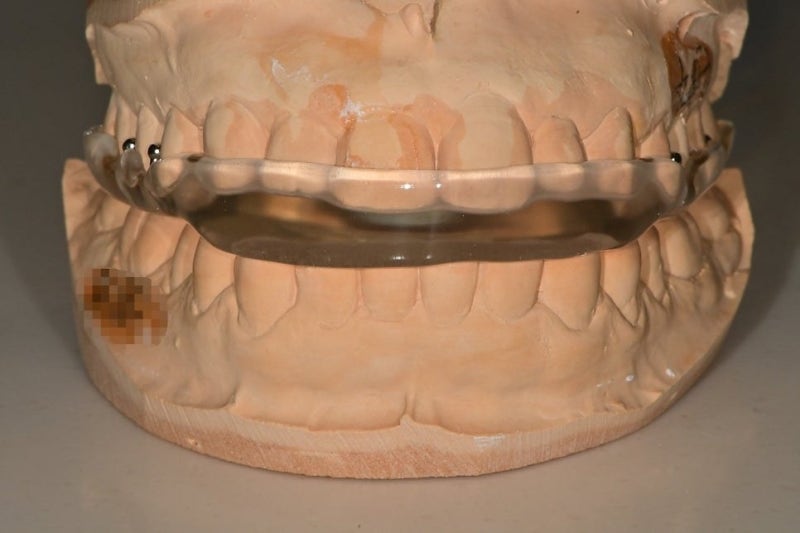
Night guards are made from thick plastic.
When worn, the guard acts as a protective barrier so the upper and lower teeth don't touch directly,
and it spreads out the stress transmitted to the TMJ during grinding.
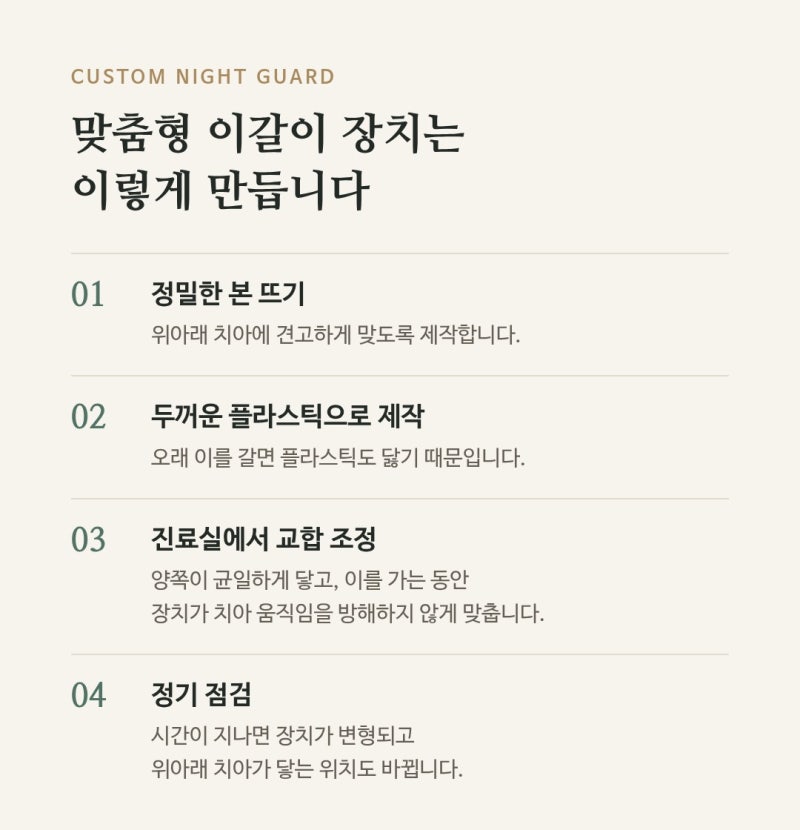
① Precise impressions – Made to fit snugly over the upper and lower teeth.
② Thick construction – Because plastic wears down too with prolonged grinding.
③ Occlusal adjustment in clinic – Adjusted so both sides contact evenly and the guard doesn't interfere with the movement of the upper and lower teeth during grinding.
④ Regular check-ups – Over time, the guard deforms and the contact points between the upper and lower teeth (occlusal contacts) also shift.
There's one important point to keep in mind.
Wearing a night guard doesn't necessarily reduce the grinding itself.
Rather, it works by reducing the impact that grinding has on your teeth and muscles.
So in cases of significant muscle tension, we sometimes combine Botox treatment with the night guard.
Is it okay to use an over-the-counter night guard?
We don't recommend it.
Off-the-shelf guards are made of soft material and can wear out quickly.
They are also not made to fit your teeth, so the bite (occlusion) between your upper and lower teeth may be misaligned,
which can also have a negative effect on the TMJ.
We Only Recommend Treatments That Match the Cause |
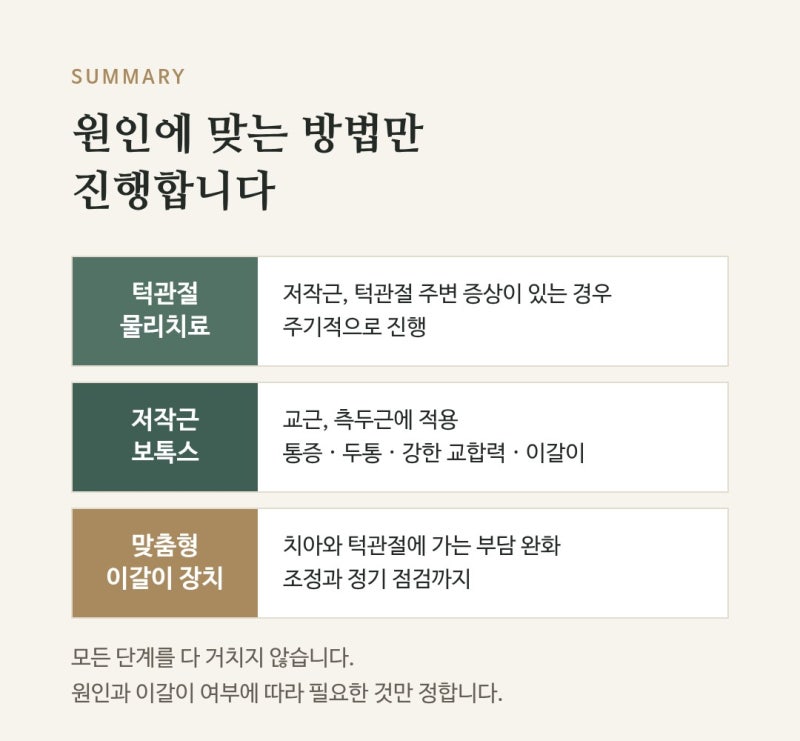
TMJ disorders are treated differently depending on whether the cause is in the joint or the muscles.
That's why Bareun Dental Clinic first distinguishes the cause through X-rays and palpation,
and then decides on the treatment that matches it.
A night guard isn't something you simply get made and forget about.
Adjustments and regular check-ups are part of the treatment.
If you're dealing with jaw pain or teeth grinding,
we encourage you to get an exam and develop a treatment plan that suits your condition.
Thank you.
Bareun Dental Clinic near Yaksu Station
Dr. Kim Tae-young, Director
This article is intended to provide general medical information. Treatment methods, effects, recovery time, and side effects may vary depending on each person's oral condition, bite, and muscle condition, so decisions should be made only after a thorough diagnosis and consultation.
Frequently Asked Questions
Should I see a dentist if I have frequent jaw pain and headaches?
Yes. If you have frequent jaw pain or headaches, a TMJ exam is recommended. Because treatment for jaw pain depends on whether the cause is in the joint or in the muscles that move the jaw, the dentist first identifies the cause.
Do TMJ disorders only involve the joint?
No. TMJ disorders can be caused not only by problems within the joint itself but also by the masticatory muscles used for chewing. Excessive tension in these muscles can lead to jaw joint pain or headaches, and a strongly developed masseter can increase chewing force, which may cause teeth or dental restorations to break repeatedly.
How does a dentist determine the cause of TMJ problems?
The cause is identified through history taking and palpation, TMJ X-rays, and a joint mobility assessment. The dentist asks which areas are uncomfortable and palpates them directly, and compares joint position using X-rays taken with the mouth closed and open. Treatment varies depending on whether the cause is the joint or the muscles, and whether teeth grinding is present.
How is TMJ physical therapy performed?
TMJ physical therapy is performed using a TMJ physical therapy device. When the masticatory muscles are the cause, regular physical therapy is applied to the muscle areas alongside Botox injections.
When do the effects of dental Botox treatment appear?
Effects typically appear about 1 to 2 weeks after the injection and last around 3 to 6 months. Results and duration vary from person to person, and injection sites are determined based on the distribution and thickness of the muscles.
Can I use an over-the-counter night guard?
No, we don't recommend it. Off-the-shelf guards are made of soft material and can wear out quickly. Since they aren't made to fit your teeth, the bite between the upper and lower teeth may be misaligned, which may also negatively affect the TMJ.